
 Back to all entries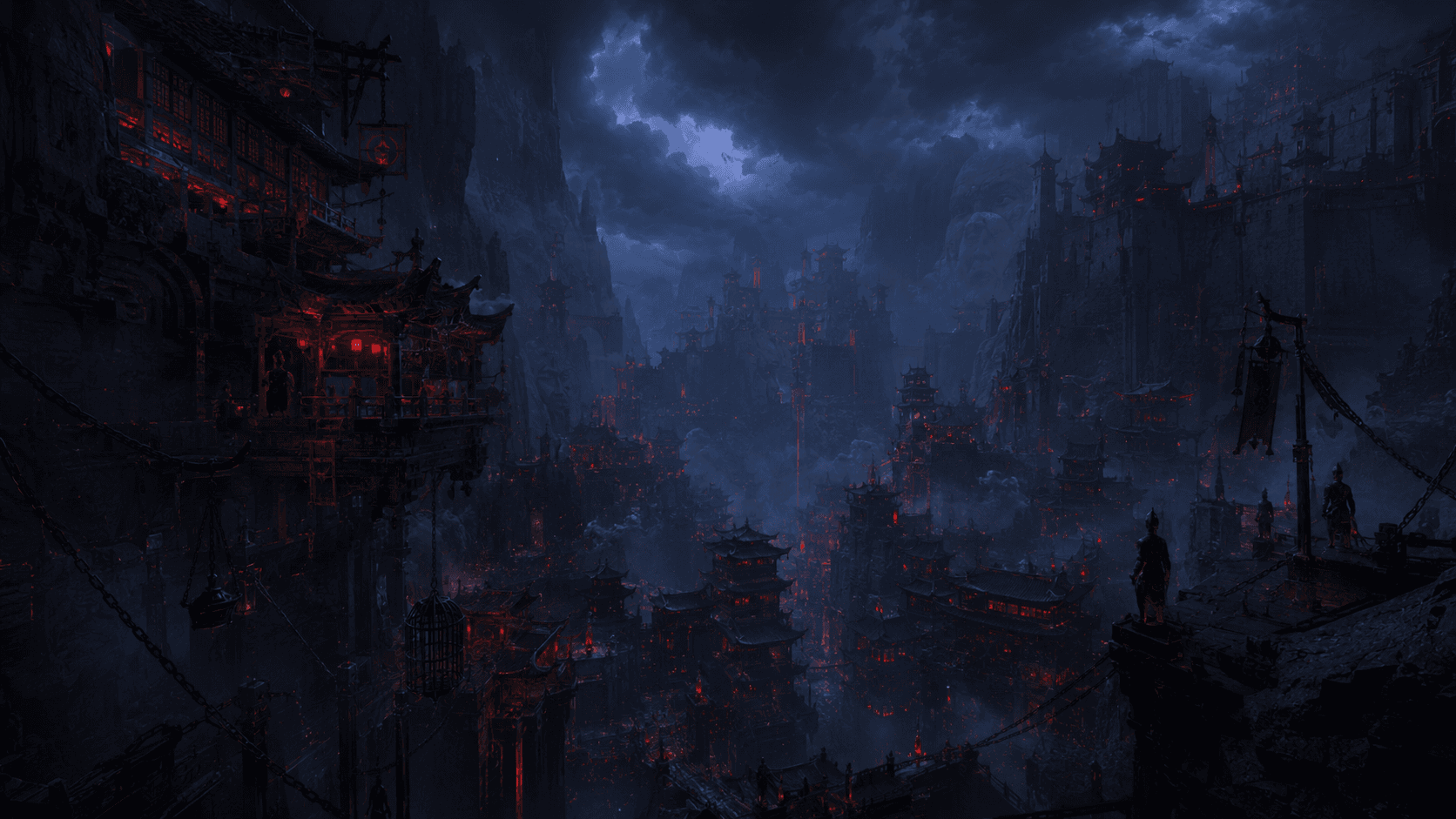
Worldbuilding Field Notes
When we began shaping the shore, the hardest challenge was never scale. It was making every ruin, ritual, and district feel as if it had grown out of the same exhausted civilization.
Designing a Shore That Already Lives With Death
The first foundation of the shore was not grandeur but order. We wanted players to feel that this was not a city freshly shattered by disaster, but one that has long organized daily life around mourning, escorting the dead, and remembering what was lost.
That is why the architecture does not celebrate prosperity. Narrow alleys, inward roofs, and steps that funnel people toward shrines all speak before the lore does.
Why the Soul Lantern Had to Become the Central Symbol
The soul lantern started as a visual icon, but it slowly became the hinge of the entire setting. It carries ritual meaning, works as an interaction medium, and connects character bonds, regional states, and emotional atmosphere.
We kept asking the same question: if the lantern disappeared, would the scene still feel like the shore? Only when it could shape both space and behavior did we consider it fully embedded.
Markets, Temples, and Borders Need One Shared Logic
Ghost markets were never meant to exist as spectacle alone. They act as the circulation points of the shore, where offerings, rumors, memories, and taboos are traded, priced, and sometimes rewritten.
Once that exchange point existed, temples stopped being landmarks and became institutions. The rules of passage, registration of the dead, and sealing of borders all had to trace back to the same system.