
Worldbuilding Field Notes
When we began shaping the shore, the core challenge was never scale. It was coherence. Every ruin, ritual, and district needed to feel as though it belonged to the same exhausted civilization.
Building a Shore That Already Remembers Death
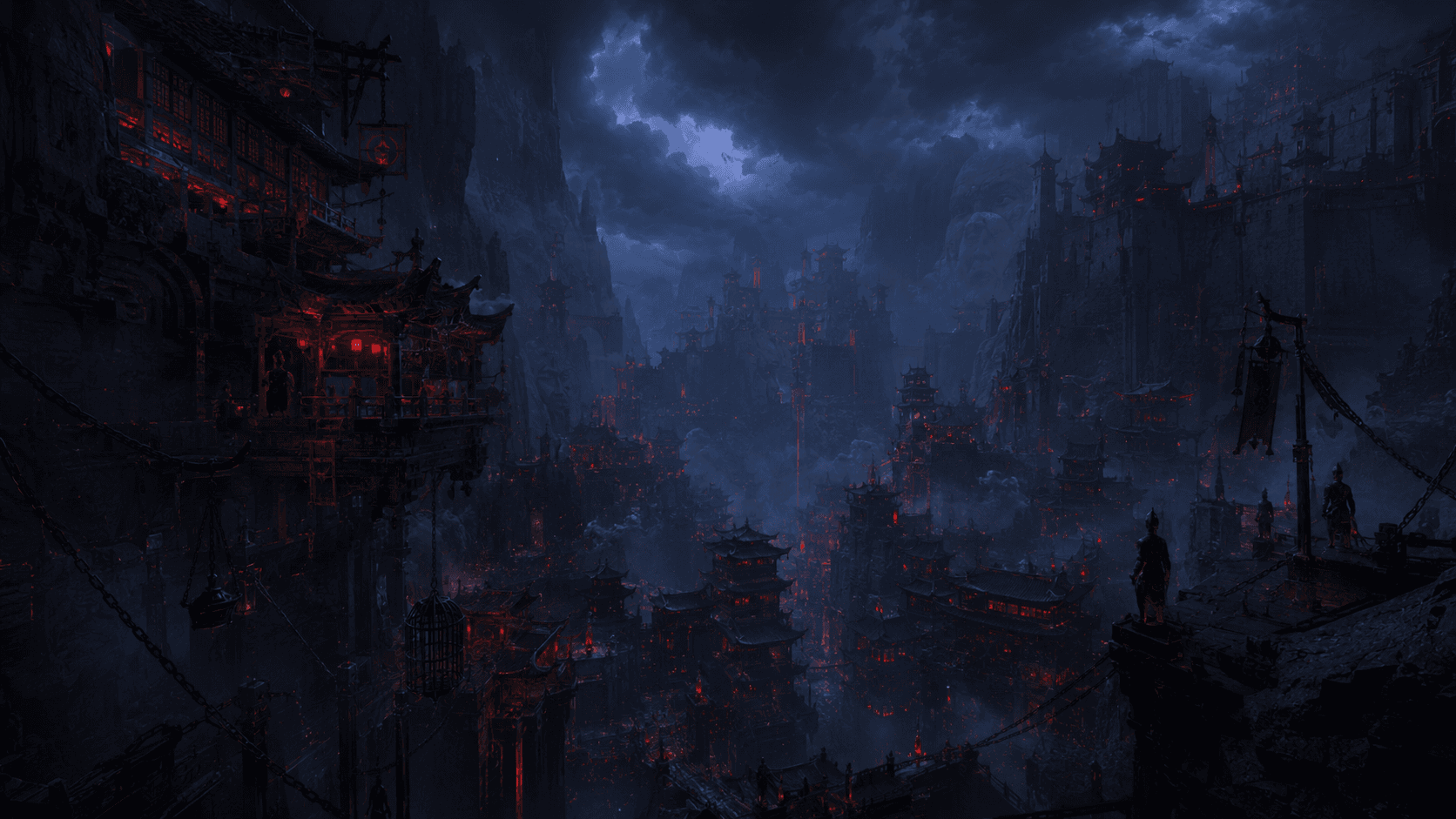
The first visual anchor was the cliffside settlement: a city that does not celebrate prosperity, but manages loss. We treated architecture as memory storage. Rooflines lean inward, corridors narrow toward shrines, and every open square is designed to funnel people toward ritual rather than trade.
That choice let the shore feel spiritually organized from the outset. Even before a player reads a line of lore, the environment suggests that death is not an interruption here. It is infrastructure.
Why the Soul Lantern Became the Centerpiece
The soul lantern solved several narrative problems at once. It gave us a visual symbol, a gameplay object, and a cultural habit shared across districts. More importantly, it let us tie emotion to space. A lane without lanterns feels abandoned; a gate lined with lanterns feels watched and sanctified.
We kept returning to one rule while designing props and rituals: if the lantern disappeared, would the scene still read as the same civilization? If the answer was yes, we pushed the design further until dependence became identity.
Designing Markets, Temples, and Borders as One System
Ghost markets were never meant to be comic relief or mere spectacle. They are where belief becomes practical. Offerings are traded, rumors are priced, and memory is bartered like currency. That idea helped us bridge sacred and mundane spaces without breaking tone.
From there, temples stopped being isolated set pieces. They became the administrative heart of the shore. Borders, taxes, passage rites, and mourning customs all trace back to temple logic. Once that system was clear, the rest of the world started to organize itself naturally.
